Track record

A selection of work, described without client names where confidentiality applies. The numbers are the ones I stand behind.

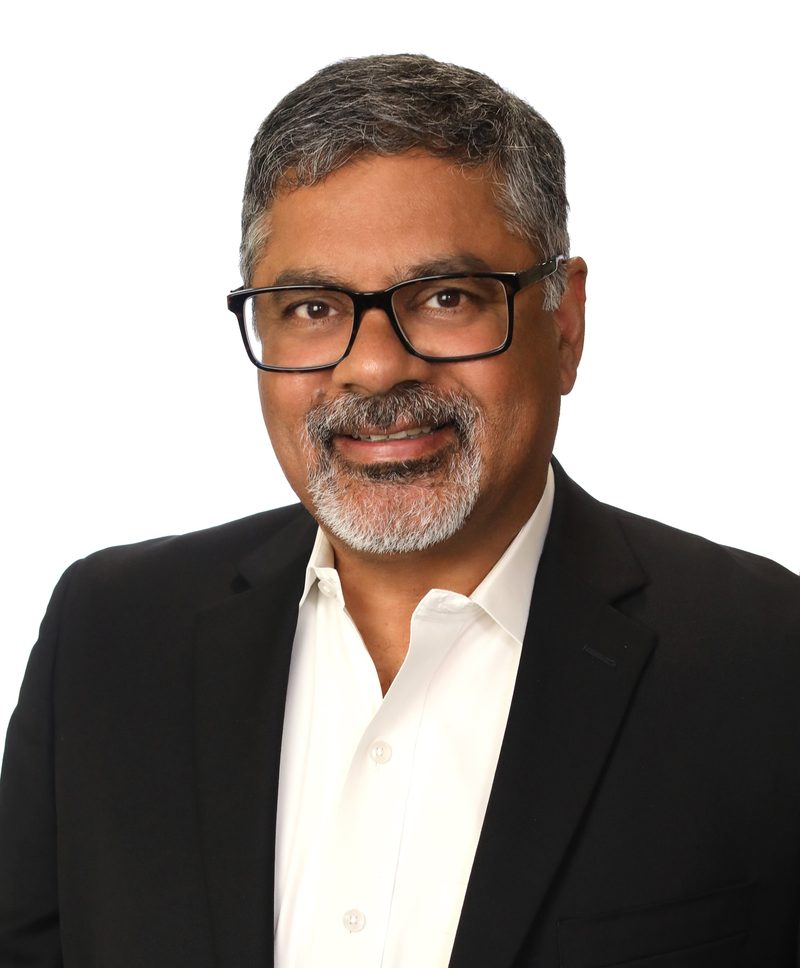
Badri Raghavan, Ph.D.

The first FDA-cleared deep-learning device for sleep therapy

Situation

Resmed shipped devices at the right clinical pressure, but the comfort settings that keep patients on therapy long term went untuned. A third of patients quit within a year, each one a multi-thousand-dollar loss in lifetime revenue.

What I did

I made the case to the executive team, secured funding, and set the technical direction: digital twins, pairs of near-identical patients in the historical data, one on tuned settings and one untuned, producing real-world evidence that comfort tuning causes adherence. That evidence cleared FDA review. I ran regulatory, clinical, and commercial in parallel with engineering so the submission and the product moved together instead of in sequence.

The number

Cleared FDA 510(k) as the first deep-learning personalization engine for the therapy, with digital twins in production. Projected $100M+ in revenue.

A GenAI health assistant, live to the public

Situation

The condition is under-diagnosed at enormous scale, close to a billion people worldwide, most of whom never connect their symptoms to a treatable problem.

What I did

I bet on general-purpose LLMs early, before most enterprises would put them in production. The hard problem was clinical trust: an assistant that guides a stranger toward diagnosis without ever giving medical advice. I grounded it with retrieval over a vetted clinical corpus and brought clinical, legal, regulatory, and marketing along with engineering so it could actually ship.

The number

Live to anyone on the internet, driving roughly an 8% lift in click-through into the diagnostic pathway.

Catching patients before they fall out of compliance

Situation

Partners are reimbursed only when a patient clears a 90-day compliance threshold, and a quarter miss it. A small front office cannot chase a million active patients.

What I did

I directed the build of machine-learning models that scored each patient's daily risk of missing compliance from device telemetry and clinical data, turning the score into a prioritized daily worklist: who to call, when, and what to try. A rules layer built from partner feedback fit it to their workflow rather than adding work.

The number

Scaled to 20.5M patients, cut compliance churn by 2.4%, and drove an estimated $50M in attributed revenue.

Cutting freight cost through a severe supply shock

Situation

A pandemic supply disruption and a competitor recall hit at once, sending demand surging. Freight ran north of $150M a year, with air-versus-sea calls made on gut feel.

What I did

This was supply chain's territory, not mine, so I earned the right to put an algorithm into it by bringing operations, finance, and IT in from the start. I set the direction, mixed-integer optimization with ML demand forecasting, to produce the optimal air and sea split per shipment, after first unifying the freight, ERP, and demand data into one foundation the model could run on.

The number

An estimated $10M a year in freight savings, still in production. A companion forecasting model for a new product line with no sales history added an estimated $5M more.

Building a global AI organization from zero

Situation

The company sat on more than 8 billion nights of therapy data, one of the richest datasets in healthcare, and almost no ability to use it. No vision, no platform, no operating model.

What I did

I was the primary architect of the AI vision, won executive buy-in and a multi-million-dollar annual budget before there was a track record, and built a team of roughly 60 specialists, about 20 of them PhDs, across four geographies chosen for talent and cost. I set the operating model that moved work from data-science insight to shipped, regulated product. Most AI organizations never build that bridge.

The number

The organization became the engine behind more than $200M in projected revenue and still drives the company's AI roadmap. Products I started are still rolling out.

Turning compliance into an accelerator

Situation

In a business where regulatory trust is non-negotiable, AI was scaling across regulated and consumer products on the same data, and the existing quality system was not built for it.

What I did

I redesigned the quality management system for AI and directed the build of a patented AIOps platform that baked compliance into the pipeline by design: model monitoring, audit trails, lineage, drift detection, and automated deployment, across dozens of models running tens of millions of daily inferences. I chaired the AI product committee and led AI fluency education for the board and C-suite.

The number

AI time-to-market 6 to 24 months faster, with compliance built in rather than bolted on.

The pattern, regulated production AI, started long before the medical-device work.

Financial services.

At FICO and HNC Software, I built and deployed neural-network fraud and credit-risk models across global banks, under bank decisioning and consumer-finance regulation, decades before deep learning went mainstream. I later led FICO's India and APAC organization as Country Head, with full P&L responsibility.

Anti-money-laundering.

At SAS, I developed AML software combining rules, statistics, and machine learning for transaction monitoring at global banking clients.

Energy.

As founding CTO and Chief Data Scientist of FirstFuel, I built the analytics architecture for an energy-intelligence platform serving Fortune 500 utilities. Central to raising $46M, twice recognized by the White House as a clean-energy analytics pioneer, later acquired by Uplight.

Mobility.

As Chief Data Scientist at Ola, one of the world's largest ride platforms, I delivered real-time pricing, demand forecasting, and matching engines across 100+ cities, with daily impact on marketplace P&L.

Start a conversation

Start a conversation